Showing posts with label Cultura. Show all posts

Thursday, April 10, 2008

Junot Diaz won the Pulitzer Prize!!


Felicidades, Junot!!

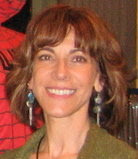
The photo is from a reading given by Junot at the Montclair Public Library back in December, hosted by Watchung Booksellers.

Amazing reading, really interesting man, and an incredible book .... check out "The Brief Wondrous Life of Oscar Wao," if you haven't already.

Fortunately, the Pulitzer Prize committee did!

Wednesday, September 05, 2007

New op-ed published

Is advertising coffee in a foreign language really going to undermine our culture and our values? (If so, someone had better tell Starbucks to take the words “grande” and “macchiato” off its menu.)

Do really we need a law to tell us that English is the primary language of this country?

And are we really threatened by bilingual families, when most bilingual children spend the majority of their day speaking English?

Apparently, some people would answer "yes" to all of the above.

My latest op-ed, All Languages Spoken Here, was just published today, and is about precisely this issue ... and how the escalating discrimination and negativity against immigrants and their languages is hastening the loss of the precious linguistic and cultural resources of our immigrant communities -- precisely at the time when we need those resources most.

By the way, the "Bogota" mentioned in the article is Bogota, New Jersey (not Bogotá, Colombia).

Because of space limitations, I couldn't include more about the personal losses that go along with this loss of language, or about how strongly I feel that everyone should be studying foreign languages, learning about other cultures, and increasing both their local and their global multicultural awareness. Fortunately, there was another op-ed in the same paper yesterday about promoting multicultural education, so at least that point of view is out there at the same time. I'll write more about the personal losses - what I see as the loss of culture, identity and soul - at a later point.

An interesting coincidence is that I wrote this article, mentioning Bogota's mayor who took offense at the "café helado" sign, a few weeks ago. And then yesterday, I found this article in the New York Times, about how Steve Lonegan - Bogota mayor and immigration opponent - is the brother of Bryan Lonegan, immigration rights activist ... and they are the grandsons of an Italian immigrant. VERY interesting article.

I start a new Spanish teaching position on Friday, and I hope I will still have time to write about the intersection of language, culture, identity and soul ... issues which are all so important to me.

Wednesday, August 29, 2007

Latinos Describe “How I Learned English” in New Essay Collection

I just found this on Hispanic Trending .... great article, and I'm buying the book today ....

It's interesting that this book touches on two things that I'm writing about -- the fact that immigrants DO learn English (despite anti-immigrant rhetoric to the contrary -- and often at the cost of their original language), and also the fact that many bilinguals feel completely different in one language than in another. Which leads me to ask, if bilinguals are different in the two languages, and then one of those languages gets lost ... what happens to that part of the person's identity that was tied to the original language?

By the way, I know all about those embarrassing mistakes you can make when learning a language ... or even when you know a language, thanks to all the wonderful regional differences in Spanish! I found out the hard way that in Venezuela, you can't say "cuchara" when you want a spoon .... let's just say that I definitely don't recommend that you go out to a nice dinner in Venezuela with a big group of people, and ask for two desserts and eight cucharas ..... it was pretty funny when my friend told me later what I had said.

We do need to keep a sense of humor when we're learning ... and remember that the important thing is, we're learning!

---------------------------------------------------------

Latinos Describe “How I Learned English” in New Essay Collection

August 27, 2007
By Jenny Shank

When I was six years old, I began taking a bus to my assigned public elementary school west of Mile High Stadium, about a thirty-minute ride away from my southeast Denver home. At school I encountered an entirely different world from that of my neighborhood: many of my classmates were the children of immigrants, and while classes were taught in English, the school encouraged expressions of different cultures and the use of Spanish language.

On one wall was a mural of an image taken from the Mexican flag, an eagle with a snake in its beak, perched on a cactus. If you behaved especially well, the teacher might choose you to wear the “Ayudante” jean jacket for the week, and give you some tickets that could be exchanged for marvelous junk at the Cinco de Mayo carnival. I don’t remember a time before I knew the story of La Llorona, which I must have heard the Mexican-American kids telling on the playground. So it was with great interest that I read How I Learned English, a new anthology edited by Tom Miller featuring 55 short essays by Latinos who made the same journey my classmates did, from the Spanish-speaking world into the English-speaking world.

PBS NewsHour regular Ray Suarez writes in his introduction that “learning a language begins a passage to another way of seeing the world and speaking it into existence.” Some of the writers struggled to learn English, while others arrived in the United States as children and soaked the language up, perhaps losing their previous fluency in Spanish in the process, as novelist Francisco Goldman did. (He once listened to a tape recording of himself as a child, and writes, “It was strange to be a college student, listening to your four-year-old self do something that you couldn’t do anymore: speak fluent Spanish.")

Changing a language can change one’s worldview or even one’s personality, as University of Michigan anthropology professor Ruth Behar writes: “They tell me I was a nonstop talker, una cotorrita. But after we arrived in the United States I became shy, silent, sullen. I have no memory of myself as a little girl speaking Spanish in Cuba.” I have observed the personality changes that using different languages can bring first hand--my husband was born in New York to French parents, and learned English as a second language, in part from Sesame Street. When he speaks in French, he is typically more of a social papillon than he is when he speaks in English.

Most of the writers in this collection entered the American educational system before the Chicano rights movement of the ‘60s and ‘70s brought about changes that welcomed multiculturalism (like that mural on my elementary school’s wall), and so several writers report that a teacher asked their parents to speak in English at home to promote the children’s fluency.

This is what happened to the incisive essayist Richard Rodriguez in the excerpt included from his book Hunger of Memory. “As a socially disadvantaged child,” he writes, “I considered Spanish to be a private language. What I needed to learn in school was that I had the right--and the obligation--to speak the public language of los gringos.” Rodriguez was shy and mumbled in class until the day when three nuns from the school visited his family’s house and suggested they practice English at home. His parents declared the nuns’ suggestion a rule, and Rodriguez’s English flourished, though not without regret for the loss of his family’s private Spanish world. “The spell was broken,” he writes.

Even when immersed in the English language, it’s not easy to learn all of the idioms and rules of English, as Richard Lederer and Josh White Jr. note in their piece, “English Is Cuh-ray-zee.” “If the teacher taught,” they write, “why isn’t it true that a preacher praught?”

“How can a slim chance and a fat chance be the same/ When a wise man and a wise guy are very different?”

In several of the essays, the writers remember language mistakes they made that caused great confusion. Alvaro Vargas Llosa writes that he learned English “the hard way--that is, wrenching my guts out with books, tapes, video courses, and that irreplaceable method, the humiliation of real-life trial and error.” He learned Spanish from his Peruvian parents, then picked up French before he began to study English at a boarding school in Britain. While there, he had an English girlfriend, and he recounts this sad and funny incident:

“After not seeing her for a few weeks, I wanted to tell her that I missed her. When I said to her, ‘I regret you,’ anglicizing the French word for missing someone, she looked at me in horror and spat out something like: ‘You are not a gentleman.’ We never saw each other again.”

Although many of the writers had fun learning English through television, movies, and music (as did Gigi Anders, who watched Captain Kangaroo and The Lucy Show, and congressman José Serrano, who listened to Frank Sinatra records), a common theme is how hard one must work to master and maintain a language. Miami Herald journalist Enrique Fernández taught college Spanish at one point, and writes, “From that experience I found out that a foreign language can be learned and that some people can learn it, while others can’t no matter how hard they try.”

Many writers note that English is a language that opens the world to them, and the image of the stubborn immigrant who doesn’t want to learn English is belied by the stories in this book. Ray Suarez writes about Samuel Huffington’s Foreign Policy essay, “Jose, Can You See?” in which “he peers into the future and sees native-born English speakers as an embattled minority.” Suarez observes that Huffington “looks at Latino American and totally misses the night school classes” and “the endless hours of ads for English-language home study kits.”

It would be interesting if How I Learned English were to be updated twenty years from now with stories from younger bilinguals, because while many writers in this collection were encouraged to cast off their old language, today there is more interest in keeping multiple languages alive. What will the English language become as more Spanish speakers learn it and more Latinos join the U.S. population?

Judging from the determination of the essayists in How I Learned English, English will continue to be the potent global language that it is today, though Spanglish might become an important secondary tongue as American English continues to fold in the words of the native languages of its population. I, for one, don’t see anything ominous in this potential development. That’s what living languages do: they change.

How I Learned English: 55 Accomplished Latinos Recall Lessons in Language and Life
Ed. Tom Miller
National Geographic Books
266 pages, $16.95

Source: New West Books and Writers

Wednesday, August 22, 2007

Who is a Latino?


L.A. Law actress Michele Greene.

Supermodel Christy Turlington.

Wonder Woman Lynda Carter.

Baseball legend Ted Williams.

New Mexico Governor – and presidential candidate – Bill Richardson.

What do these individuals have in common?

Their American-sounding last names – and their Latino cultural heritage.

I call them "Latinos incognitos," because at first glance, they might not easily be recognized as Hispanic. With Anglo fathers and Latina mothers, the institution of marriage automatically hid the Latino heritage of all these individuals – at least on paper.

As a result, they certainly don’t “sound” Latino. They may not even “look” Latino, either. So are they really Latinos?

Because of his name and his part-Anglo heritage, Bill Richardson has been accused of being “not Latino enough.” But at the same time, he is also accused of being “too Latino,” trying to leverage his Hispanic heritage for political gain.

The reality, of course, is that Bill Richardson is Latino, and he is Anglo. The two cultures are not mutually exclusive – although they are often treated as such. When was the last time you saw a box for “multicultural” on any official form? Our society does not easily accept the middle ground between two heritages.

On official forms, as in life, bicultural Latinos are pressured to choose. And inevitably, they will receive criticism for their choices. Kevin Johnson (another Latino incognito), in his memoir, How Did You Get to Be Mexican, recalls being accused in college of “checking the box” as a Latino to get preferential treatment, but not being “Latino enough” to back it up with political activism.

Even Latinos with two Latino parents can have their Latinidad challenged. A dear friend of mine, who proudly describes herself as Puerto Rican, was often made to feel less so by her native Puerto Rican peers in New Jersey, because she wasn’t “born on the island.” Another friend who doesn't "look" Latina recalls that the only way she could convince her Hispanic classmates that she was indeed Latina was to tell them she watched Walter Mercado's horoscopes with her grandmother.

But who is a Latino, anyway?

Is it someone who is born in this country, a descendant of the original Spanish settlers?

Is a Latino someone whose family immigrated from a Spanish-speaking country and created a home here?

Can you be a Latino without a Hispanic name? Without speaking Spanish? Without a direct connection to your heritage?

What makes someone a Latino?

It’s certainly not just the name, despite the U.S. Census’ original method of counting Latinos by using the category “Hispanic surname.” Where does that leave Governor Bill Richardson or Michele Greene (who, as a bilingual singer/songwriter, recently released her second CD, Luna Roja, in both English and Spanish)?

Language helps – but you don’t even have to speak Spanish to be a Latino (and a growing number of Latinos don’t). The reverse, however, can be true – you can start to feel Latino just by speaking Spanish. There is something in the sound of the language, the words themselves, that bring Latinidad to those who choose to celebrate its beauty, its richness, and its innate poetry.

Those who learn Spanish in order to bark orders at employees or simply to fulfill a foreign language requirement are not likely to feel it, though. Here, intention is everything.

To me, being a Latino is more than just a language or a last name, or even what country you came from or can trace your roots to. Being a Latino is about a feeling, an attitude, a connection to life and culture and family and music, and a desire to experience it all to its fullest.

And to me, being a Latino means living life with sabor, and taking the time to appreciate and enjoy everything – and everyone – that makes life worth living.

And we can all use a little bit of that Latinidad.

Tuesday, July 31, 2007

The British are coming ... and they're speaking only Spanish!

"I didn't know there were Hispanic British people."

That's what my son said when I told him him about this fascinating new project by BBC Mundo.

José Baig, a Hispanic affairs correspondent for BBC Mundo, and Carlos Ceresole, a video producer for the Spanish American section of BBC, have just set off on a two-week long trip across the United States with one simple goal in mind: to speak only Spanish during the entire trip.


Their route will begin in San Agustin, Florida and end in Los Angeles California. Along the way, they will be asking everyone they meet, "¿Hablas español?"


You can follow their journey by reading their highly entertaining and informative blog, and communicate with them via email (bbcmundohispano@gmail.com), Skype and Facebook.

I wish they were doing this two months from now, because I would definitely assign their blog – written entirely en español – as required reading for my college students this fall. In fact, I may still do that – especially since my emphasis is always on teaching Spanish through Latino culture and heritage in the US, and celebrating the people and resources we have here, instead of always treating Spanish as a "foreign" language.

In the meantime, I will be following their progress, and wishing them buen viaje y buena suerte ... and I hope you will, too!

Saturday, May 12, 2007

Inspiración, sin límites

Fun and inspirational -- a reminder that the only limits we have are the ones in our own mind.


Tuesday, May 01, 2007

El cielo

I am in love ....

.... with YouTube.

Yes, YouTube.

I cannot believe what I just found .... poems by Mario Benedetti .... read by Benedetti himself and other actors (from the movie, "El lado oscuro del corazón") ....


Táctica y estrategia


No te salves


Corazón coraza

What a treasure ....

Thursday, April 26, 2007

Foreign languages ... they're not foreign any more!

Check out this link for the published version of my article about a local high school Spanish Club's trip to a Spanish-speaking city .... 20 minutes from home.

Imagine if every language teacher in the country sought to help their students make this kind of personal connection with the language they teach, the people who speak it, and the culture that surrounds it.

What a difference that would make, not only in our language classes, but in our society.

Young people would start to see languages as something real, something they can use every day, something that connects them to people and to new (and positive) experiences.

And maybe some of them would think twice before categorizing immigrants and other speakers of different languages as a negative influence that detracts from our country and our culture.

And perhaps, as well, the young people who grow up in these linguistic communities will see their language and culture validated, and will understand the value of maintaining their language and culture, while still being fully "American."

In Italian, there is a phrase, "sogni d'oro." These are my golden dreams.

Saturday, April 07, 2007

Just for fun!

This always brings a smile to my face (and gets me moving, too) .....

Click here.

(If you get a message about a user name and password, type in "guest" for the username and "porfavor" for the password.)

Enjoy!!

Wednesday, February 07, 2007

¡¡PBS en español!!

Great news for the entire Spanish-speaking and bilingual community of the United States, as well as Latinophiles!

PBS has just announced the creation of a new network, V-me, that will start broadcasting on March 5 in cities with major Latino communities (isn't that most of the United States at this point?).

V-me will include both children's and adult educational programming, including shows about nature, science, politics and culture, as well as an updated telenovela called "Nuestro Barrio," that will touch on current social themes. Local affiliates will be able to incorporate their own programs about their local communities.

This is a long time coming, but it's never too late! In fact, V-me was created by Mario Baeza, head of the Baeza Group, for precisely the same reasons I created Chispa Productions: to create quality programming in Spanish that is fun, educational and culturally relevant to today's Spanish speakers and learners in the United States.

As today's New York Times article notes, "Mr. Baeza became interested in a public broadcasting network for Latinos years ago, when his children were young, and he searched, fruitlessly, for television programs they could watch in Spanish that had the same educational values as English-language public television."

Amen to that! We all have the same mission. And if a rising tide lifts all boats ... well, this is an ocean that reaches far and wide, and we will all benefit.

For more information, read the full article in the New York Times here.

And keep that dial tuned to V-me, starting March 5!

Thursday, November 09, 2006

What happened to salsa?

I miss salsa.

Sure, there are now more salsa clubs and salsa classes and even salsa conferences than ever before.

But it's not the same salsa that I first knew. Somehow, salsa has lost its soul.

Back in the late 70s, when I was a college senior and Gloria Estefan was just one of the singers in a new band called "Miami Sound Machine", I learned how to dance salsa in the apartment of my Venezuelan friends. It was simple, and it was fun. Grab your partner, feel the beat, and move.

If you wanted to get fancy, maybe occasionally you and your partner would throw a turn in there. Or you could add that little extra beat with your foot ("la patita") before stepping into the next step.

But mostly, you wanted to feel the music and enjoy dancing with your partner. You could even chat while dancing. Either way – verbally or nonverbally – salsa was about communicating with your dance partner and enjoying the music.

Not so anymore.

Salsa has somehow become a competitive sport. How many turns can you do in one beat?? What's your signature flash move? Don't forget to throw your arm up in the air with a flourish every time you turn or step away from your partner! And do you dance on 1 or on 2?

Communicate with your partner? Enjoy the music? Not a chance. And converse? ¿Estás loco?

Give me old-style salsa any day ... and give salsa back its soul!

Tuesday, October 31, 2006

Salud, amor y pesetas

¡Salud!


Un grupo de amigos, un vinito ....

Best friends and a good wine .... is there any better combination? Latin cultures have known this forever.

So it's no wonder that there are so many different ways to toast with friends in Spanish.

The simplest and most direct:

¡Salud!


But few are satisfied with that. So it is often expanded to:

¡Salud, amor y pesetas!


Good, but still not good enough. Sure, health, love and money are important, but you need something more ... and everyone has their own favorite variation of this theme:

Salud, amor y pesetas, y tiempo para gozarlos

Salud, amor y pesetas, y tiempo para gastarlos

Salud, amor y pesetas, y tiempo para gustarlos

Salud, amor y pesetas, y tiempo para disfrutarlos

(And by the way, how come that never got updated to Salud, amor y pesos, or Salud, amor y bolívares, or Salud, amor y colones?)

But my favorite bríndises are the ones I learned in college from a dear Venezuelan friend (and by the way, one constant in my life seems to be incredibly wonderful Venezuelan friends ... I'm going to have to blog some other time on what is either the amazing Venezuelan national character, or my amazing luck in finding such wonderful friends). But back to my point .... the toasts:

Pa' arriba
Pa' abajo
Pa'l centro
Pa' dentro!


.... and this treasure ....

Manjar de dioses,
Dulce tormento,
¿Qué haces afuera?
¡Vámonos pa' dentro!


Recently I wrote to my college friend and told him that I still remembered the toasts he taught me, more than 25 years later.

His response:

Estiro el brazo,
Empino el codo,
Y de un solo golpe,
Me lo tomo todo!!


Good friendships last forever, and that is certainly something to toast to.

Anyone else have a favorite bríndis to share? Add them to our comments .... and ¡salud!

Saturday, October 07, 2006

¡Abrazos!

This has nothing to do with Spanish ... unless you count the fact that many Latinos cultures seem to know this innately ... but it puts a smile on my face every time I see it, so I'm sharing it here:


¡Un fuertísimo abrazo para todos!

Wednesday, August 30, 2006

Becoming a citizen


I went with my friend Liz yesterday to watch her take her oath of
citizenship. Even though she probably would have become a US citizen at
some point anyway, she actually didn't have much of a choice. She's a
teacher here, and if you apply for a teaching license in New Jersey,
you must sign this statement: "I realize that if I do not become a
United States citizen within the next five years, the New Jersey State
Board of Examiners may revoke any license issued to me." So to keep her
job, she had to become a citizen.

Her appointment was for 8:00 am at INS in Newark, so we got there
early. Four and a half hours later, she was a citizen -- literally the
very last one to receive her papers on a very long day, when she had
been one of the first to arrive. (There is no concept of "first come,
first served" at INS, I guess.)

Interestingly enough, here is what you do NOT do when you become a
citizen:

1. Recite the pledge of allegiance

2. Sing the national anthem


Here is what you DO do:

1. Recite the oath below

2. Watch a video of Lee Greenwood's "Proud to be an American" (and sing
along if you want to)


The Oath of Citizenship


"I hereby declare, on oath, that I absolutely and entirely renounce and abjure all allegiance and fidelity to any foreign prince, potentate, state, or sovereignty of whom or which I have heretofore been a subject or citizen; that I will support and defend the Constitution and laws of the United States of America against all enemies, foreign and domestic; that I will bear true faith and allegiance to the same; that I will bear arms on behalf of the United States when required by law; that I will perform noncombatant service in the Armed Forces of the United States when required by the law; that I will perform work of national
importance under civilian direction when required by the law; and that I take this obligation freely without any mental reservation or purpose of evasion; so help me God. In acknowledgement whereof I have hereunto affixed my signature."


Were any of you US citizens aware that we are supposed to be bearing
arms on behalf of the United States when required by law, and
performing noncombatant service and "work of national importance under
civilian direction when required by law?" I certainly wasn't. Or maybe
only naturalized citizens are required to do this??

You also get to watch a video of George Bush saying "God bless you and
God bless America." (So much for separation of church and state.) At
least we had an immigration official with a sense of humor, because he
said, "After the President speaks for two minutes, the screen will go
black. Don't forget to clap."

I also expected an inspiring speech, but basically all we got was a
reminder to register to vote, and a warning that you are now stuck in
the United States because the government took your green card, and you
don't have a passport, so don't plan on going anywhere (even for a
family emergency) until you get your passport ... which, by the way,
takes 4-6 weeks.

Despite the delays and the bureaucracy, though, I will say that every
single person we came into contact with there was extremely nice,
polite, pleasant and helpful. That was a probably the nicest surprise
of the day. I guess Tuesdays must be "oath of citizenship" day, so
there aren't any major problems or arguments going on, and there is a
nice energy to the place (or there would be, if you didn't have to wait
four and a half hours - which, by the way, apparently is "short,"
according to one of the workers there).

So, all in all, a lesson in democracy and bureaucracy. And now Liz can
do two things: vote, and keep her job as a teacher.

Saturday, August 12, 2006

More Trino

Well, between this post, the previous one, and the one before that, I have a trinity of Trinidades ....

I have been looking for an article about Trinidad Sanchez, Jr. that would do justice to his work -- not just his poetry, but his dedication to teaching poetry, especially to the young and/or disaffected or marginalized. I found this wonderful piece in the Denver Post.


"Trino's" poems gave color to life

By Claire Martin
Denver Post Staff Writer

August 5, 2006


Trinidad Sánchez Jr. wrote popular poems and worked with young offenders and prison inmates.

Chicano poet and activist Trinidad "Trino" V. Sanchez Jr., who died July 30 at age 63 in San Antonio, was renowned for the hip, socially astute writing that galvanized audiences in venues including the Taza Cafe he owned with his wife near downtown Denver.

Sanchez's seminal "Why Am I So Brown?" and other popular, provocative poems inspired younger generations of poets. The poem's title is a question asked by a Chicana elementary schoolgirl in one of Sanchez's writing classes. She was among countless children who knew Sanchez through artist-in-residence programs and other venues.

The poem is his response to her query. An excerpt: "Understand ... brown/ is not a color ... it is: a state of being/a very human texture/alive and full of song."

"When I think about Trino's legacy, I think about all the children and young people he taught," said Maurice Ka, a Denver poet and spoken-word artist who performs as El Negro.

Sanchez was the ninth of 10 children born in Pontiac, Mich., to poet and pool hall owner Trinidad Sanchez Sr., and Sofia Sanchez. Throughout his childhood and adolescence, he yearned for hugs and encouragement from his father, who rarely displayed affection.

Trinidad Sanchez Sr. spent 12-hour days running his pool hall. At home, he holed up with his manual typewriter, writing poems. When Trinidad Jr. left home at age 19, his father wrote "To Trino," a poem that began:

"When you feel lonesome and blue,
Count all the stars in the sky.
It is the times we think of you
Since the day you said 'Good-bye."'

At the time, Trinidad Sanchez Jr. dismissed the poem. He left home and eventually joined a Jesuit monastery in Detroit, where he worked with young offenders and prison inmates. He had a special affinity for Chicanos and African-Americans, many of whom had discordant relationships with their own fathers.

When he was 39, Sanchez reread "To Trino." The final lines leapt out at him - "Don't fear the storm, in the brink/Or the high winds in the night/It is Papa, who took a drink/And wanted to hug you tight."

Sanchez finally recognized the poem as the expression of the love his father never expressed aloud or with hugs. He included "To Trino" in "Poems by Father and Son," his 1991 anthology of his own work, and his father's.

By then, he was writing poems too, many of them published in journals and anthologies. After 27 years as a Jesuit monk, he left the order but remained active in prison ministry. Sanchez used poetry as a medium for emotionally constrained men and included writing in his men's workshops and community outreach groups.

He became a schoolteacher. He led creative writing classes in Michigan and Texas and worked with the developmentally disabled as well as conventional students.

Between the late 1990s and 2003, when Sanchez lived in Denver, he worked with young fathers through Family Star's Montessori and Early Head Start and other programs. Social services workers from Colorado to New York knew Sanchez as an exceptionally successful mentor for disaffected young fathers.

He led workshops urging them to express their love for their children. In a 2000 Denver Post article, Sanchez lamented that of Family Star's 75 fathers, only 38 were listed as an involved parent.

Sanchez proved more artist than businessman. Cafe Taza, the Platte Street coffee shop designed to showcase spoken-word performances, closed in 2003, about a year after Sanchez and his wife, Regina Chavez y Sanchez, opened it.

Young poets and spoken-word artists sympathized. Their support for Sanchez continued after he and his wife moved back to San Antonio, shortly afterward.

When Sanchez suffered two strokes last month, Colorado poets and performance artists promptly rallied to hold fundraisers to pay for daunting hospital bills. It was one way, Ka said, to repay the man who was mentor and confidant for so many.

Along with poet Day Acoli and other Sanchez admirers, Ka is organizing a memorial tribute this weekend at the Aurora Black Arts Festival, 9900 E. Colfax Ave. Organizers named the festival marketplace after the poet and established a community altar where mourners can leave candles, letters, poems and other ephemera.

Survivors include wife Regina Chavez y Sanchez of San Antonio.


Wednesday, August 02, 2006

The Death of a Peaceful Warrior


I'm in shock ... I just got back from a week-long trip to Costa Rica (more on that later) to find that Trinidad Sanchez, Jr., the wonderful poet I met in San Antonio two months ago, has passed away from a stroke.

The funeral is today in San Antonio, and additional memorial services are also being arranged. Many are benefits to help his family with expenses, because he did not have medical insurance. Please consider sending a donation in honor of Trino and all that he brought to us.

For more information, click here.

And in the meantime, take a moment to listen, and to celebrate Trino's life and poetry.

Monday, July 10, 2006

Gracias, Trini Lopez


This is a copy of an e-mail I just sent to Trini Lopez, whose "Latin Album" may actually have been the first spark to ignite Chispa!

I had been looking at a copy of his album on my wall (I have it framed), decided to Google him, and came across his e-mail address ... here is the result.

Hola Mr. Lopez,

It occurred to me the other day, as I was looking at the framed cover of my absolute favorite "The Latin Album" on my wall (sharing a space with the cover from Eydie Gorme and Trio Los Panchos' "Great Love Songs in Spanish"), that I should write to you to thank you for sharing your music with the world, and in doing so, sparking a lifelong love of Spanish for me, and helping me to become what my friends call an "honorary Latina."

Despite the fact that my mother was a Spanish and French professor, and she originally spoke Italian as a child, I didn't grow up speaking any language other than English. But I did inherit my mother's facility for languages. And, just as fortunately, I also "inherited" the two record albums mentioned above, which she must have bought in the 1950s or whenever they originally came out.

I started studying Spanish in 11th grade and immediately knew I liked it. But I think it started to become much more than "like" when I came across "The Latin Album" in our family's extremely tiny LP collection. I listened to that record over and over and over. And over again. I loved every song, even before I could understand the lyrics. And then, miraculously, after all that listening, I started to be able to understand the lyrics!

(My mother also knew the power of your music to teach Spanish -- once I sat in on one of her college Spanish classes, and she was using your version of "Adelita" to teach the subjunctive.)

I have listened to that record over and over and over again in the more than 30 years since. I recorded it onto a cassette tape. And then FINALLY, after a very exhaustive search (ending up with a record store in England), I was able to find it on CD and bought it, along with a few extra copies for my dearest friends.

Since falling in love with Spanish language and culture -- and yes, I do think it was "The Latin Album" that really started it -- I have lived in Spain, become fluent in Spanish, gained an entire community of Latin friends, become a Spanish teacher, and now, a producer of Spanish educational videos featuring US Latinos.

And I have become a Latin music addict; I can't tell you how many CDs I own and how many albums I have bought from iTunes, in every Latin genre you can think of, from bolero to rock to pop to flamenco to merengue to salsa to reggaeton to you name it.

And my favorite, favorite album, through it all, is still "The Latin Album."

Thank you so, so much for being a spark for me. I hope I am a spark for others to also fall in love with Spanish language and culture ... and that's why I named my Spanish educational video company "Chispa Productions." And my videos are designed specifically to teach Spanish by featuring the Spanish language and Latino cultures in the United States, and by celebrating the contributions of Latinos to our culture. With this, I feel as if I have come full circle from when I first started learning Spanish 30 years ago, with the Spanish language songs of a Mexican-American singer born in Texas.

I wish you all the best, and once again -- un millón de gracias.

Un fuertísimo abrazo,

Ruth Kunstadter

Friday, May 12, 2006

Earl does it again!!

"My Name is Earl" wins the prize again for creative use of Spanish!

(And for one of the best inside jokes for Spanish speakers that I've ever seen on national television!)

For those of you who aren't familiar with the show, the two women characters are Joy, Earl's white-trash and hilariously over the top ex-wife, and Catalina, the kind and sexy maid who has befriended the main character, Earl, and his brother Randy.

Whenever Joy insults Catalina, Catalina responds with a stingingly nasty flurry of Spanish.

The thing is, though, what she's actually saying in Spanish isn't nasty at all! It's a "secret" message to the show's Spanish-speaking viewers. Scroll down two posts to see what Catalina first said to Joy (and to which Joy responded in her inimitable drawl, "I don't speak maid!").

Last night, my kids called me in excitedly to tell me that Catalina had done it again, and they wanted to know what she said. Thanks to Tivo, we rewound, and I saw Catalina saying in her most vicious tone to the exasperating Joy:

"Con esto concluímos nuestra primera temporada de 'Earl.' Estamos muy agradecidos con su acompañamiento. Anticipamos verlos el próximo otoño!"

Translated into English, she said:

"WIth this, we conclude our first season of 'Earl.' We thank you so much for joining us. We look forward to seeing you next fall!"

Well, I'll definitely be there next fall, not only to watch one of the funniest shows on TV, but to keep an eye out for more "mensajes secretos" for the Spanish-speaking public ...

¡Que viva Earl!

Thursday, April 13, 2006

Mi Nombre es Earl

Felicitaciones to the producers of the program, "My Name is Earl," for their creative use of the Spanish language and the non-stereoptyical way they portray Latinos!

I've always enjoyed the character Catalina, played by Nadine Velázquez. Catalina is caring, funny, mysterious and naturally sexy.

In tonight's episode, Earl's ex-wife, Joy, says something snide to Catalina about her work as a maid. Catalina responds with an evil eye and a blistering paragraph in Spanish.

If you didn't know the language, you would think that Catalina is cutting Joy down to size with a scathing insult in Spanish. But in reality, this is what she said:

"Quiero agradecer a todo el público latino que nos acompaña cada semana, y para los que no son latinos, les felicito por aprender otro idioma."

("I want to thank the entire Latino public that watches us every week, and for those of you who are not Latino, I congratulate you on learning another language!")

I loved it!!

Also loved this past week's Saturday Night Live, by the way, with all the Spanish spoken by Antonio Banderas, Horatio Sanz and Fred Armisen (whose mother is Venezuelan, we found out).

Viva el español ... and the producers who recognize that a second language is to be celebrated, not feared.

Wednesday, February 22, 2006

Sabor y Cultura en Durham, NC

Just got back from Durham, NC and surrounding towns, where I took my daughter (and her two brothers) on college visits to Duke, UNC, Wake Forest and Elon.

I have to say I was pleasantly surprised at the diversity I saw in Durham. It was my first time in North Carolina, and I couldn't believe how much Spanish I heard being spoken. There was also a nice selection of libros en español at the Barnes & Noble I went to, and I was even able to get a copy of Laura Esquivel's new book, Malinche, which I had been wanting to get.


I also had the pleasure of meeting my blog friend, Nayeli, a doctoral student in film and literature at Duke, who is from Mexico City and writes a blog called Native Stranger that I serendipitously found one day and loved. We ate at Super Taquería, the most authentic Mexican restaurant I've ever eaten at in the United States, complete with huge glass barrels of aguas frescas, including tamarindo, jamaica, horchata ... ¡riquísimas!


Picture of aguas frescas (not at Super Taquería, but this is exactly what they looked like!)

Nayeli noted that the Mexican population in Durham has grown 500% in the last five years. It was like seeing Hector Tobar's "Translation Nation" in action. Even the tiniest little towns that we drove through (like Elon) have at least two Mexican restaurants on their main strip, and they look real (not Taco Bell-type).

After our dinner, we went to Duke to watch the 2005 Oscar-nominated shorts. And that's where we saw Nacho Vigalondo's 7:35 de la mañana. I can't explain why I loved this so much, but it is just incredible. To see what I'm talking about, go here. And watch it twice (it's quite a different viewing the second time around!).


Scene from 7:35 de la mañana

Who knew a visit to Durham, NC would be full of Spanish language, literature and film? Definitely a pleasant surprise for me, and another sign of how our country is being enriched more and more by Latino cultures all around.